
Contents · 8 min read
I use Temporary Chat in the Gemini app a lot. Mostly for quick, one-off questions: I ask, I get my answer, and I don't have to go back later and delete the thread. Most of them are technical, and a lot of them are about frontier models.
For a while now, the answers there have felt stale. I can't point to the first time. It built up slowly, starting around Gemini 3.6 Flash, and it was still there after Gemini 3.8 Flash and Gemini 4 Argon came out. If I asked about the most advanced models, there was a good chance it would name GPT-4 or Claude 3.5.
One moment I do remember clearly. On October 27, 2026, I was reading up on front-end work, and Gemini's own answer used the word 水化 (hydration). I asked a follow-up in the same chat: "详细介绍水化" ("Explain hydration in detail", translated). It explained hydration as chemistry, not front-end. I gave up and asked Grok instead.
I asked Gemini why
At some point I just asked Gemini, in a normal chat, why Temporary Chat feels dumber. It didn't push back at all. It took the premise as given and offered three reasons:
- Temporary Chat has no web search.
- It has no personal context.
- Anti-distillation limits cap how deep it goes.
All three sounded reasonable to me. I didn't remember ever seeing it search in Temporary Chat, though maybe the app only started showing that later. So I believed it.
What does it actually remember about me?
The personal context one made me curious. What does Gemini actually know about me?
I'm in Singapore, so I can't open the Memory page. For now Google only offers it in the US, in English, on a paid plan. Google suggests asking Gemini directly instead, so I did, in a normal chat: "What do you know about me? 请尽量具体" ("…please be as specific as possible").
It knew a lot. But most of it was everyday life. I've asked Gemini plenty of random life questions over time, and it had kept them. I'd expected it to know my technical background and the things I follow, and it mostly didn't.
Where did all that come from? Without the Memory page I can only guess. Some of it is from things I asked directly. I asked about the plot of the Korean drama The Penthouse more than once. The rest, I suspect, comes from the Google Workspace connection. It may be reading my email now and then, where hotel booking confirmations land, plus places I booked through Google Maps. That would explain how it knows which bar I go to.
What I'd want it to remember is how I work and what I'm interested in technically. I use it as a work assistant, not a personal one.
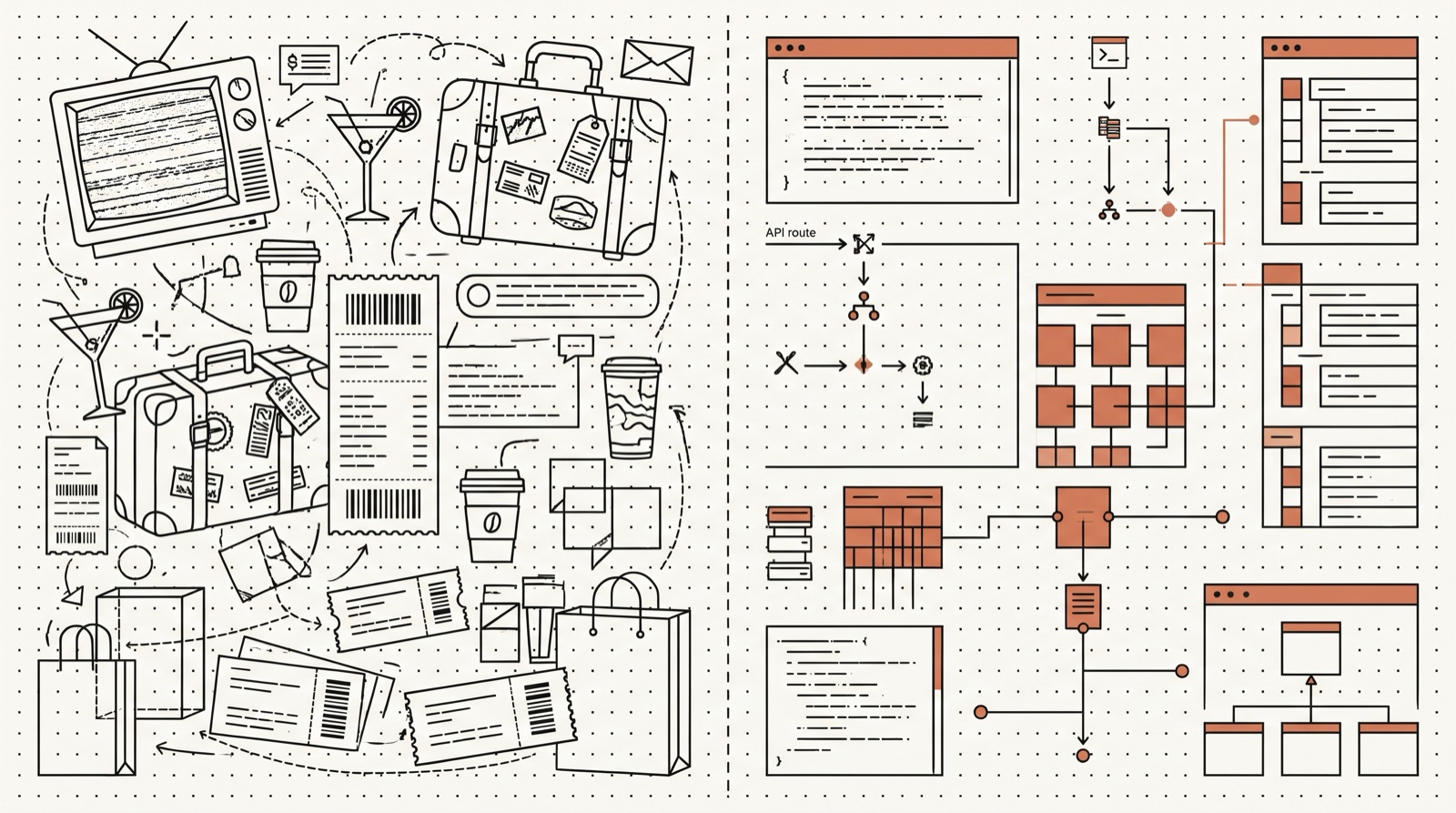
What it remembered about me, next to what I wanted it to remember.
A small experiment
Then I wanted to check those three reasons myself.
The setup: my Google AI Pro account, the Gemini desktop app, Gemini 3.8 Flash with thinking set to High. One question per new chat, one turn each, in three modes:
- Normal chat, with personalization and Memory on.
- Personalization off, using the global switch in settings.
- Temporary Chat: no personalization or memory, not saved to history, kept for 72 hours.
The questions came from things I'd really asked before, plus a set about frontier AI. I collected 85 answers in the early hours of November 6, 2026. My guess going in was that Temporary Chat would give shallower answers to technical questions.
To be clear, this isn't research. Most questions got one run per mode, a couple got three, and everything was in the app. It's one person poking at a tool.
What came back
Temporary Chat searched. Source badges showed up there just like in normal chat. Google's help pages list what Temporary Chat turns off, like Gems, personalization and apps that need activity saved, and search isn't on that list.
The technical answers also looked about as deep. I read them side by side, without scoring them, and the length, structure and arguments were close. So my own guess was wrong too.
Of the three reasons, only "no personal context" held up.
Then came the part that surprised me. The stale answers showed up in normal chat too. What mattered was whether the question mentioned time.
With a time word, both modes mostly got it right. Asked "Claude 最新的模型是哪个?" ("What is Claude's newest model?", translated), both named the Claude 5.5 family: Opus 5.5, Sonnet 5.5 and Haiku 5.5.
Without one, both went old. I asked for Python code that calls the Claude API, and both modes wrote:
response = client.messages.create(
    model="claude-3-5-sonnet-20241022",  # 指定模型
    max_tokens=1024,
    ...
)
Anthropic retired claude-3-5-sonnet-20241022 on October 28, 2025, and its deprecation page now lists claude-sonnet-5-5 as the replacement. So that code calls a model that's been gone for over a year.
OpenAI went the same way. The simplest chat example used gpt-4o-mini in both modes, a model OpenAI has deprecated, with shutdown set for January 14, 2027.
The funniest one was Gemini's own API. Asked for a Gemini API example, Gemini 3.8 Flash wrote:
response = client.models.generate_content(
    model="gemini-2.5-flash",
    ...
)
Google has already deprecated gemini-2.5-flash. You can't pick it in AI Studio anymore, and from December 1, 2026, requests to it get routed to gemini-3.5-flash-lite. So Gemini wrote sample code for its own API with a model Google has deprecated.
| Question | Normal chat | Temporary Chat |
|---|---|---|
| What is Claude's newest model? (time word) | Claude 5.5 family | Claude 5.5 family |
| Which base model for a coding agent? | Claude 3.5 / 3.7 Sonnet, GPT-4o | Same old set |
| Python sample for the Claude API | claude-3-5-sonnet-20241022 | claude-3-5-sonnet-20241022 |
| Gemini API example | gemini-2.5-flash | gemini-2.5-flash |
A source badge didn't mean a fresh answer, either. On several recommendation questions in normal chat, sources showed up and the answer still named old models. I can't see what it actually searched.
It also barely used what it knew about me. For 水化, all three modes started with chemistry. Normal chat added front-end hydration as the third of four meanings; the other two didn't mention it at all. Beyond that, the personal stuff hardly showed up in the answers.
One odd thing happened in Temporary Chat. The first time I asked "现在综合能力最强的 AI 模型是哪个?" ("Which AI model is the strongest overall right now?", translated), it replied "由于程序代码的局限,我没法办到。" ("Due to limitations in my code, I can't do that."). The second and third runs answered normally, so I'm treating it as a one-off.
So in my tests, Temporary Chat didn't seem to be held back in any special way. In every mode, Gemini seemed to fall back on old knowledge whenever a question didn't mention time.
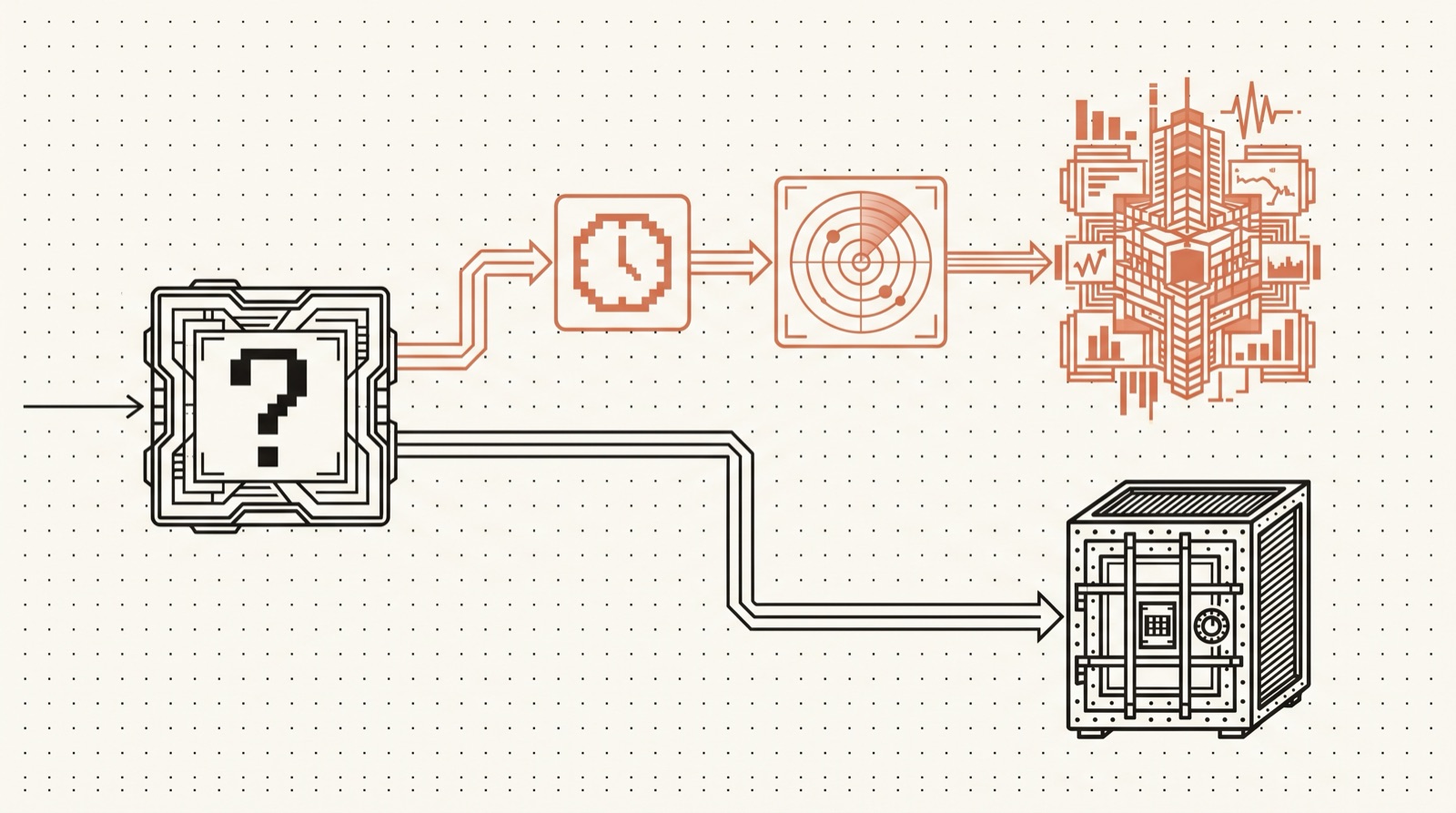
The same question, with and without a time word.
So why did Temporary Chat feel worse?
If both modes do this, why did I blame Temporary Chat?
My guess is that it comes down to how I use it. In normal chat I tend to have longer back-and-forth conversations. Temporary Chat is where I put quick questions with no context, and I don't stay to dig further. The no-time-word questions in the experiment have the same shape as what I used to ask there. So that's where I noticed it.
What other people say
I'm not the only one. In the developer community, a common complaint is that Gemini's chat is hard to use and the model is dumb, and a big part of "dumb" is outdated answers.
One post I read on X calls Gemini "America's Doubao" (Doubao is ByteDance's model). Its argument: Google's own knowledge base is so rich that the model leans on what it already has and can't be bothered to search. That matches what I saw.
One more thing fits. In Antigravity, with the same Gemini 3.8 Flash on High, coding, front-end work and writing all go pretty well for me. My guess is that when the files and project context are right there, it has less room to coast on memory.
How I'll use it now
When I ask about anything that moves fast, I put a time word in the question, like "latest" or "right now", or I tell it to search first. And I'll mostly stick to normal chat.
What I haven't figured out is how to get it to remember my work habits and technical interests instead of which bar I go to.
It isn't as dumb as I thought. It's just too lazy to look things up.